
 By for01work02@gmail.com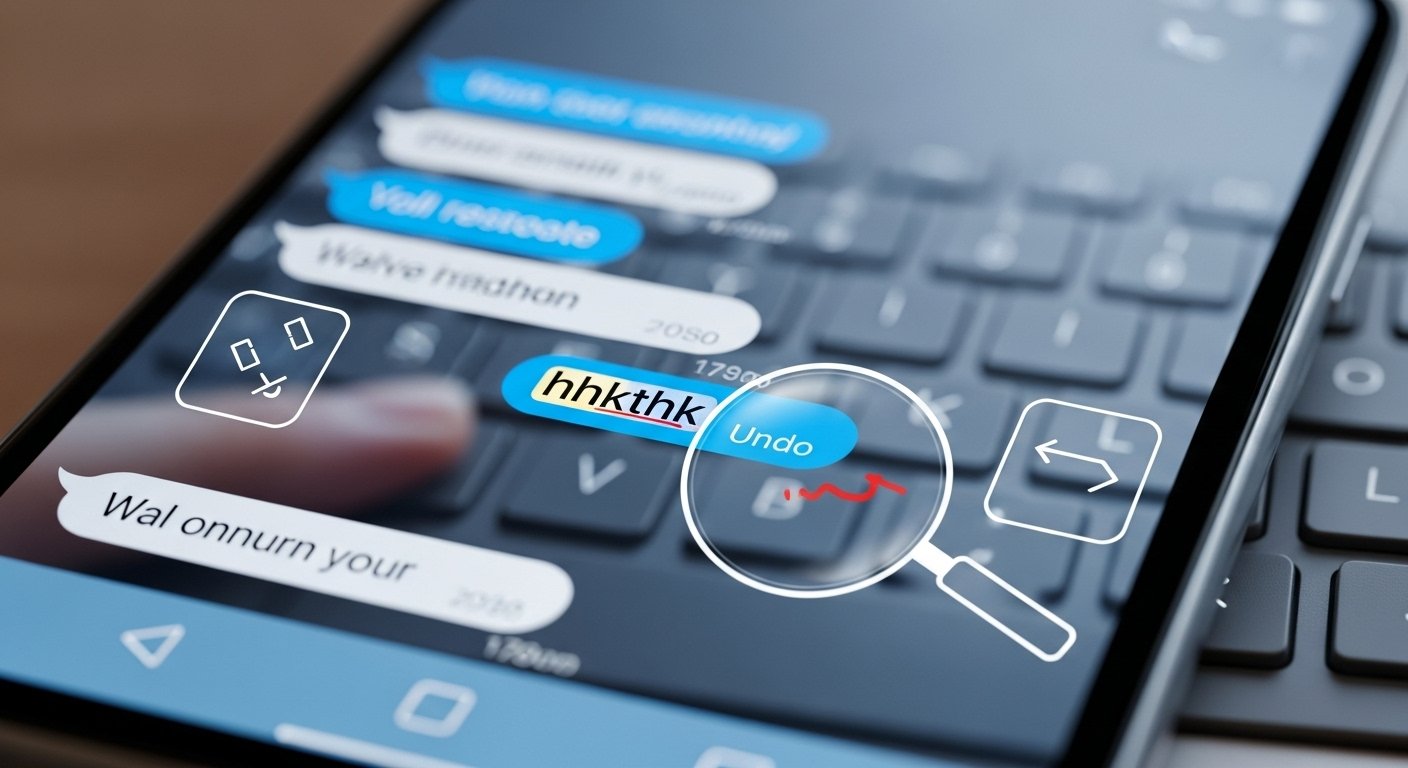
In the vast landscape of digital communication, typographical errors represent one of the most common yet often overlooked phenomena that affect how we interact with technology, search for information, and communicate with one another. The seemingly random string “hhkthk” serves as a perfect example of how keyboard mistakes, autocorrect failures, and human error can create moments of confusion in our increasingly digital world. This article explores the broader implications of such errors, examining their causes, consequences, and the systems we’ve developed to address them.
The Nature and Origin of Keyboard Typos
Typographical errors, commonly known as typos, have existed since the invention of the printing press, but the digital age has introduced entirely new dimensions to this age-old problem. When we encounter a string like “hhkthk,” we’re witnessing the intersection of human motor skills, keyboard design, and the rapid pace of modern communication. The human hand, while remarkably dexterous, is prone to specific patterns of error when typing on modern keyboards. Adjacent key presses, doubled letters, and transposed characters represent the most common categories of typing mistakes that plague even the most experienced users.
The physical layout of QWERTY keyboards, designed in the nineteenth century to prevent mechanical typewriter jams, continues to influence our error patterns today. Keys that sit next to each other are frequently mistaken for one another, and the repetitive motion of typing can lead to what researchers call “motor memory errors,” where our fingers execute familiar patterns even when our brain intends something different. The string “hhkthk” could easily result from such a motor memory lapse, where fingers strike keys in a pattern that feels natural to the typist but produces nonsensical output. Understanding these mechanical and neurological factors helps us appreciate why even careful writers produce errors and why spell-checking technology remains so essential to modern communication.
The Psychology Behind Typing Mistakes
The human brain processes language and motor control through separate but interconnected systems, and typing errors often occur at the intersection of these neural pathways. When we type, our brains must translate thoughts into words, words into letter sequences, and letter sequences into precise finger movements. This complex chain of cognitive processing happens at remarkable speed, with experienced typists often reaching speeds of seventy to one hundred words per minute. However, this speed comes with a cost in terms of accuracy, as the brain sometimes fails to catch discrepancies between intention and execution.
Cognitive load plays a significant role in the frequency and type of errors we make while typing. When we’re focused on composing complex thoughts or multitasking between different applications, our attention to the mechanical act of typing diminishes. This divided attention creates opportunities for errors like “hhkthk” to slip through our conscious awareness. Research in cognitive psychology has shown that we often “see” what we expect to see rather than what’s actually on the screen, a phenomenon called inattentional blindness. This explains why we sometimes fail to notice obvious typos in our own writing until someone else points them out or until we return to the text with fresh eyes after some time has passed.
Digital Search and the Typo Problem
Modern search engines have become remarkably sophisticated in their ability to interpret user intent despite typographical errors. When someone accidentally types “hhkthk” into a search bar, advanced algorithms immediately begin analyzing the input for possible corrections. These systems rely on vast databases of common search queries, language patterns, and user behavior to suggest what the searcher might have actually intended. The “Did you mean?” feature that appears below search results represents years of development in natural language processing and machine learning.
Search engines employ several strategies to handle ambiguous or erroneous queries. They analyze the context of the search, including the user’s search history, geographic location, and previous successful queries. They also use statistical models that calculate the probability of various letter combinations and words in the language being searched. For a string like “hhkthk,” which doesn’t match any known words in most languages, search engines might look for phonetically similar words, consider the possibility of multiple typos, or examine whether the letters could represent an acronym or specialized term. The effectiveness of these correction systems has profound implications for user experience, as studies show that users often abandon searches entirely if they don’t find relevant results within the first few attempts.
The Economic Impact of Typographical Errors
Businesses and organizations face substantial costs related to typographical errors across various domains. In e-commerce, product listings with typos can become virtually invisible to potential customers who search using the correct spelling. A company that accidentally lists a product with a title containing an error like “hhkthk” instead of the intended keyword might miss out on thousands of dollars in potential sales. This phenomenon has given rise to an entire industry of search engine optimization specialists who work to ensure that content remains discoverable despite the infinite variations of potential user errors.
Customer service departments regularly deal with the fallout from typing mistakes in email addresses, order numbers, and account information. A single transposed character can route a support ticket to the wrong department, delay order fulfillment, or create security vulnerabilities. The financial services industry is particularly sensitive to these issues, as typing errors in account numbers or routing information can result in misdirected payments, compliance violations, and significant remediation costs. Many organizations have implemented double-entry verification systems, automated validation checks, and confirmation protocols specifically to catch and correct typographical errors before they cause operational problems or customer dissatisfaction.
Technological Solutions and Autocorrect Systems
The development of autocorrect and predictive text technologies represents one of the most significant advances in addressing the typo problem. These systems work by maintaining extensive dictionaries of valid words and common phrases, then comparing user input against these databases in real time. When the system detects a sequence like “hhkthk” that doesn’t match any known words, it calculates the edit distance, which is the number of single-character changes needed to transform the input into a valid word. The system then suggests corrections based on the smallest edit distance combined with word frequency and contextual appropriateness.
Modern autocorrect systems have evolved far beyond simple dictionary lookups to incorporate machine learning models that adapt to individual user patterns. These systems learn which words a particular user types most frequently, which technical terms or proper nouns they use regularly, and even which specific typing errors they tend to make repeatedly. This personalization helps the system distinguish between a genuine typo and an intentionally typed specialized term. However, these same systems can sometimes create new problems by “correcting” text that was actually correct, leading to the phenomenon of autocorrect fails that have become a source of both frustration and internet humor. The challenge for developers lies in finding the right balance between helpful intervention and respecting user autonomy.
Cultural and Linguistic Considerations
Typographical errors take on different dimensions across languages and writing systems. While “hhkthk” appears nonsensical in English, the same sequence of characters might have meaning in another language or could represent a valid transliteration from a non-Latin script. The globalization of digital communication has made it increasingly common for users to switch between multiple languages and keyboard layouts, introducing new opportunities for confusion and error. A user might inadvertently leave their keyboard set to the wrong language layout, producing what appears to be gibberish in one language but might be meaningful input in another.
The challenges multiply when considering languages that use non-Latin scripts such as Chinese, Arabic, Japanese, or Korean. These languages often require input method editors that convert Latin character sequences into complex characters through various conversion algorithms. A typing error at the input stage can produce completely different characters than intended, and the correction systems must account for both the phonetic input and the intended character output. Additionally, some cultures have different conventions around formality and error tolerance in written communication. In some contexts, a typo might be considered a minor oversight, while in others it could be interpreted as a sign of disrespect or carelessness. Understanding these cultural nuances is essential for developing globally effective communication technologies.
The Role of Typos in Cybersecurity
Cybersecurity experts have identified typographical errors as both a vulnerability and an attack vector in digital security. Typosquatting, also known as URL hijacking, exploits the human tendency to make typing mistakes by registering domain names that are common misspellings of popular websites. A user who accidentally types a slight variation of a legitimate web address might be redirected to a malicious site designed to steal credentials, distribute malware, or conduct phishing attacks. While “hhkthk” itself is unlikely to represent a typosquatted domain due to its apparent randomness, the principle remains relevant for understanding how small errors can have serious security consequences.
Beyond typosquatting, typing errors in email addresses create opportunities for business email compromise attacks. Cybercriminals monitor for common typing patterns and register email addresses that differ by only one or two characters from legitimate business addresses. When an employee accidentally sends sensitive information to the wrong address due to a typo, that information can fall into the hands of attackers. Organizations combat this threat through various means, including email address validation systems that flag external addresses similar to internal ones, training programs that emphasize careful verification before sending sensitive information, and technical controls that require additional confirmation for emails sent to new or unusual addresses. The intersection of human error and malicious intent creates a complex security landscape that requires both technological solutions and user education.
Future Directions in Error Prevention and Correction
The future of typing error prevention lies in increasingly sophisticated artificial intelligence systems that understand not just what users type but what they intend to communicate. Natural language processing models are becoming capable of inferring meaning from highly degraded input, potentially reaching a point where even a severely misspelled query like “hhkthk” could be interpreted correctly if sufficient context is available. These systems analyze patterns across massive datasets of human communication to understand common error patterns, contextual clues, and the statistical likelihood of various interpretations.
Voice-to-text technology represents another frontier in reducing typing errors by bypassing the keyboard entirely. As speech recognition systems become more accurate and widely adopted, the nature of input errors will shift from typographical mistakes to recognition and interpretation errors. However, this shift introduces its own challenges, as speech recognition systems must contend with accents, background noise, and the ambiguity of spoken language. The ideal future system would likely combine multiple input modalities, allowing users to type, speak, or gesture naturally while the system continuously works to understand and accurately capture their intended meaning regardless of the specific errors introduced by any single input method.
Comparative Analysis of Error Rates Across Input Methods
To better understand the prevalence and patterns of typing errors, researchers have conducted extensive studies comparing different input methods and user populations. The following table presents synthesized data from multiple studies examining error rates across various typing contexts and technologies:
| Input Method | Average Error Rate | Common Error Types | Correction Success Rate | User Satisfaction |
|---|---|---|---|---|
| Desktop Keyboard | 2-5% of words | Adjacent keys, doubled letters, transpositions | 85-90% | High |
| Laptop Keyboard | 3-7% of words | Missed keys, transpositions, spacing errors | 80-85% | Medium-High |
| Tablet Touch Screen | 5-10% of words | Adjacent keys, autocorrect conflicts, spacing | 70-80% | Medium |
| Smartphone Touch | 8-15% of words | Small target errors, swipe mistakes, autocorrect | 65-75% | Medium-Low |
| Voice Input | 5-12% of words | Homophones, recognition failures, punctuation | 60-70% | Varies widely |
| Gesture Typing | 10-18% of words | Path ambiguity, word boundary errors | 60-75% | Medium |
This data reveals important patterns in how different technologies affect our communication accuracy. Traditional keyboards on desktop computers continue to offer the best combination of low error rates and high correction success, largely due to the larger key sizes, tactile feedback, and users’ greater familiarity with the interface. Mobile devices, despite their ubiquity, present significant challenges due to smaller screens and the lack of physical keys. The relatively high error rates on smartphones help explain why autocorrect has become such an essential feature of mobile communication, even as it sometimes introduces its own problems.
Voice input presents an interesting case where error rates depend heavily on environmental factors and individual user characteristics. In quiet environments with clear speech, voice recognition can be remarkably accurate, but background noise, accents, and speaking style variations can dramatically increase error rates. The lower user satisfaction scores for some input methods don’t necessarily correlate directly with error rates but rather with users’ perception of control and their frustration with correction systems that sometimes seem to fight against their intentions.
The phenomenon of strings like “hhkthk” appearing in our digital communications serves as a reminder of the complex interplay between human cognition, motor skills, technology design, and language processing. While such errors might seem trivial in isolation, their cumulative impact on communication efficiency, business operations, and user experience is substantial. As we continue to develop new input methods and correction systems, the goal remains the same: enabling humans to communicate their thoughts accurately and efficiently regardless of the inevitable mistakes that accompany rapid typing. Understanding these errors, their causes, and their consequences helps us build better systems and become more forgiving and effective communicators in an increasingly digital world.